
Why Dust Control Matters More Than Most People Realize
Dust is often viewed as little more than a housekeeping issue, but in many homes, workplaces, and construction sites, it can become a serious air quality concern. Every time materials are cut, sanded, demolished, or moved, tiny particles are released into the air. While some dust settles quickly, much of it remains airborne long enough to be inhaled by workers and occupants.
Common Sources of Airborne Dust and Particulate Matter
In Alberta, dust is a common challenge across a wide range of industries, including construction, manufacturing, agriculture, and oil and gas. Renovation projects in homes and commercial buildings can also generate significant amounts of airborne particulate matter. Depending on its source, dust may contain substances such as silica, asbestos fibres, mould spores, wood dust, drywall particles, and other airborne contaminants that often require professional mold testing and environmental assessment.
Not all airborne particles are visible. Some of the smallest particles can remain suspended in the air for hours and travel throughout a building through ventilation systems or normal air movement. Over time, exposure to elevated particulate levels may contribute to respiratory irritation, allergies, asthma flare-ups, and reduced indoor air quality.
Controlling dust is not simply about keeping a worksite clean. It is about protecting people, reducing environmental risks, and maintaining healthy indoor environments. With growing awareness of occupational hygiene and indoor air quality, effective dust control has become an essential part of responsible property management and workplace safety.
Effective Dust Control Measures Start Before Work Begins
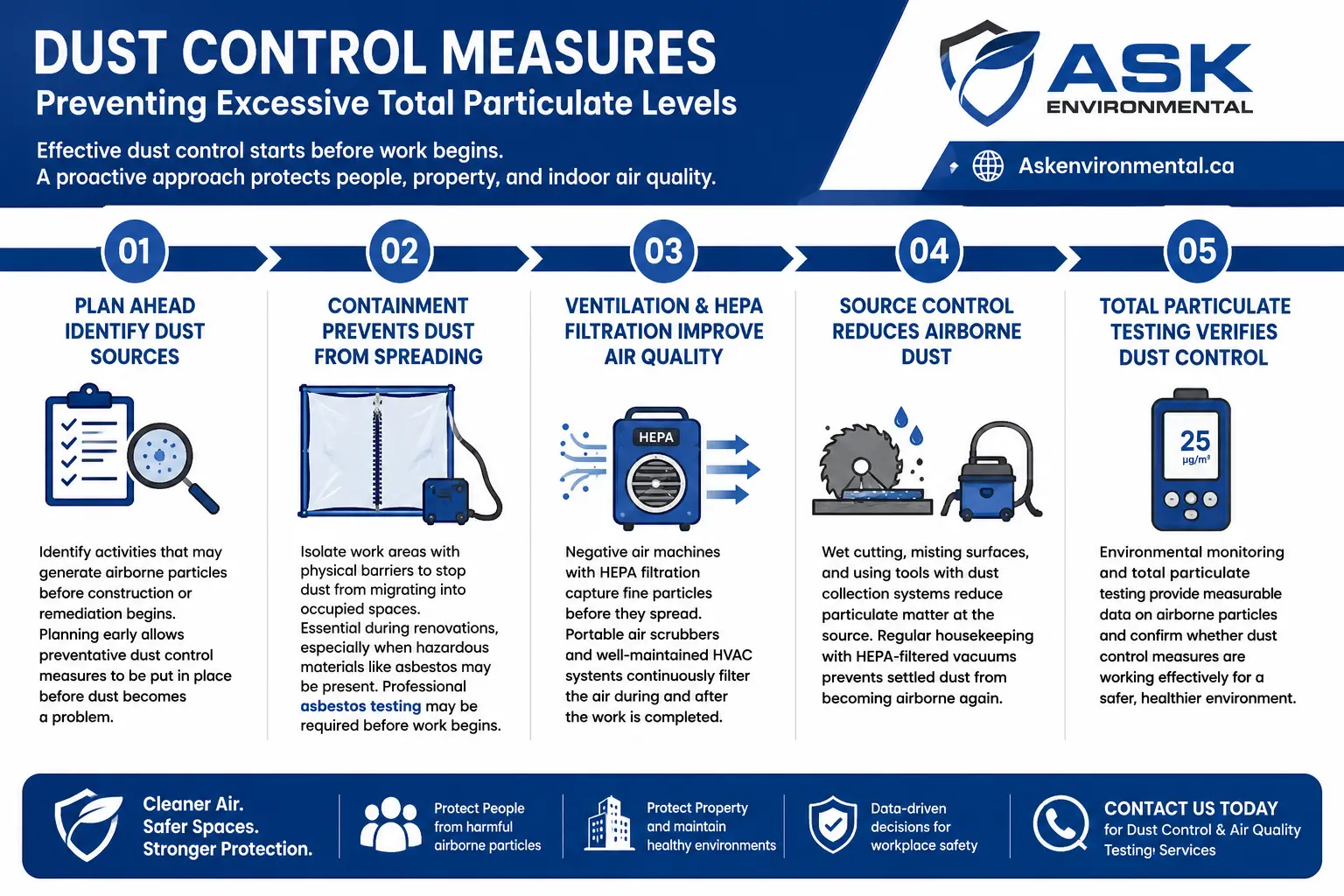
The most successful dust control plans begin long before construction or remediation work starts. Identifying activities likely to generate airborne particles allows property owners and contractors to put preventative measures in place before dust becomes a problem.
Containment is one of the most effective ways to reduce the spread of airborne particles. Isolating work areas with physical barriers helps prevent dust from migrating into occupied parts of a building. During renovations, this is especially important when older materials may contain hazardous substances such as asbestos, which may require professional asbestos testing before renovation or demolition work begins.
Ventilation also plays a critical role. Negative air machines equipped with HEPA filtration can capture fine airborne particles before they spread throughout a property. Portable air scrubbers and properly maintained HVAC systems further improve indoor air quality by continuously filtering the air during and after work is completed.
Controlling dust at its source is equally effective. Wet cutting, misting surfaces before demolition, and using tools equipped with dust collection systems significantly reduce the amount of particulate matter released into the air. Regular housekeeping using HEPA-filtered vacuums rather than dry sweeping also helps prevent settled dust from becoming airborne again.
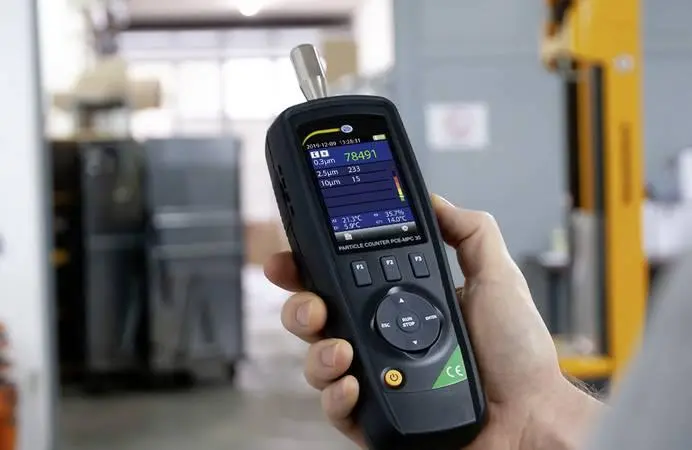
Environmental monitoring should also be part of any dust management program. Total particulate testing provides valuable information about airborne particle concentrations and helps determine whether dust control measures are working effectively. Rather than relying on visual observations alone, testing delivers measurable data that supports informed decisions about workplace safety and indoor air quality.
How Ask Environmental Helps Improve Indoor Air Quality
Every building and every project presents unique challenges. We begin by understanding the environment, the work being performed, and the potential sources of airborne contaminants. Whether supporting a commercial renovation, industrial facility, or residential project, our goal is to develop practical dust control strategies that fit the specific conditions on-site.
Where required, we perform total particulate testing to evaluate indoor air quality before, during, or after work takes place. This testing helps establish baseline conditions, identify elevated particulate levels, and verify that containment and cleanup procedures have been effective. If results indicate that airborne particles remain above acceptable levels, we work with our clients to identify the source and recommend appropriate corrective measures.
In situations involving hazardous materials such as asbestos or mould, professional asbestos removal and specialized containment procedures help prevent airborne contaminants from spreading beyond the work area. Specialized containment systems, HEPA filtration, and strict cleanup procedures help prevent contaminants from spreading beyond the work area. Follow-up air quality testing provides confidence that the environment is safe before normal occupancy resumes.
We work with homeowners, contractors, employers, and property managers throughout Central Alberta, including Red Deer, Calgary, and Edmonton, to improve indoor air quality through effective environmental monitoring and dust control. Our approach combines practical experience with proven testing methods to help clients protect both people and property.
Why Total Particulate Testing Is Essential
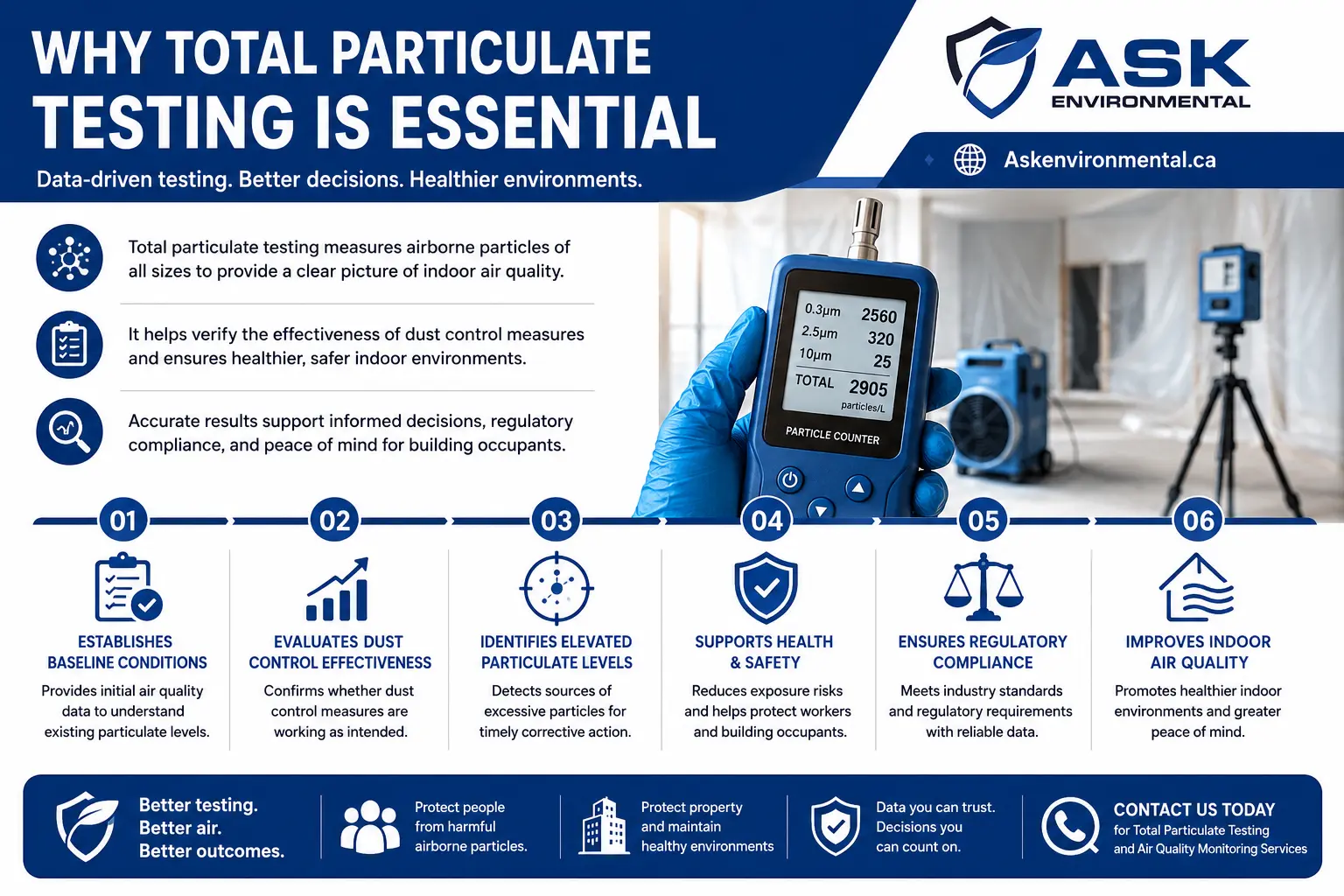
Managing dust is about more than meeting regulatory requirements. It is about creating healthier workplaces, reducing exposure to airborne contaminants, and preventing small issues from becoming larger problems. By taking a proactive approach to dust control and total particulate management, property owners can improve indoor air quality, support workplace health and safety, and reduce the risk of costly environmental concerns down the road.
Contact Ask Environmental today to learn more about dust control measures, total particulate testing, indoor air quality assessments, occupational hygiene services, and professional air quality monitoring throughout Central Alberta, including Red Deer, Calgary, and Edmonton. Our experienced team helps homeowners, businesses, contractors, and property managers create healthier indoor environments while reducing exposure to airborne contaminants.