
You cannot see them, and often you cannot smell them. Yet volatile organic compounds, commonly known as VOCs, can be present in the air of almost any building and, at elevated concentrations, can affect the health and comfort of the people inside.
VOCs are gases released from a wide range of everyday materials. Paints, varnishes, adhesives, flooring products, furniture, cleaning products, and certain building materials all emit VOCs into the surrounding air. New construction and recent renovations are among the most common triggers and can sometimes create conditions where mold testing becomes important as well. In commercial and industrial environments, solvents, fuels, and manufacturing processes can contribute additional exposure.
At low levels, VOCs are present in most indoor spaces and are generally not a cause for concern. At higher concentrations, however, they can cause headaches, dizziness, eye irritation, fatigue, and respiratory discomfort. People with asthma, allergies, or other respiratory conditions tend to be more sensitive, and prolonged exposure to certain compounds has been associated with more serious long-term health effects.
The problem has become more pronounced as buildings have grown more energy efficient. Tighter seals and better insulation reduce heating and cooling costs, but they also trap indoor air contaminants with fewer opportunities to escape. In that context, understanding what is in the air inside a building is no longer a niche concern.
It is a practical part of responsible property management.
When VOC Testing Makes Sense and What It Reveals
A building can appear clean, well-maintained, and completely unremarkable while still containing elevated concentrations of airborne chemicals. Without professional testing, there is no reliable way to know.
Testing is particularly valuable following new construction or renovation work. Fresh paint, flooring adhesives, cabinetry, and other recently installed materials are common sources of elevated VOC emissions. Occupants may notice unusual odours or begin experiencing symptoms without connecting them to indoor air quality. Testing removes the guesswork.
It is also worth considering when occupants report health concerns that seem to improve once they leave the building. In workplaces, poor indoor air quality can affect employee comfort, concentration, and productivity. Employers and property managers who take air quality seriously are better positioned to identify the cause of these issues early as part of a broader occupational hygiene and workplace safety strategy.
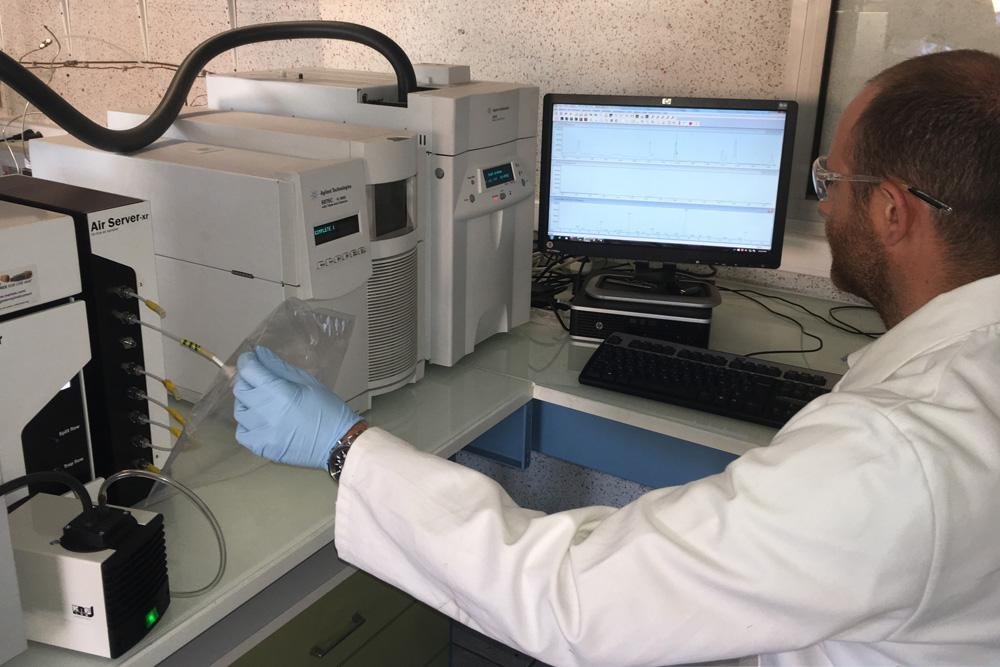
Ask Environmental uses specialised equipment and sampling methods to measure VOC concentrations across indoor environments. Samples are analysed to determine both the types and levels of compounds present, and results are assessed against established health and occupational exposure guidelines. This gives property owners an accurate, evidence-based picture of conditions inside their building and a clear basis for any decisions that follow.
Testing is also useful for establishing baseline air quality conditions, particularly after remediation work, environmental incidents, or major renovations where verification of indoor air quality is required.
How VOC Remediation Creates Healthier Indoor Environments
Identifying elevated VOC levels is only the first step. Effective remediation focuses on addressing the source directly rather than masking symptoms or odours. In some environments, remediation may involve materials or chemicals that require specialised handling similar to controlled substances protocols.
Where the source is a specific material or product, removal or replacement is often the most straightforward solution. In other cases, isolating the affected area or applying appropriate sealants can reduce emissions without requiring full removal. Improving ventilation is another important tool. Increasing fresh air intake, upgrading HVAC filtration, or adjusting airflow can significantly reduce VOC concentrations throughout a building, particularly where complete source removal is not practical.
Ask Environmental works with property owners to identify the source of elevated VOC levels and develop a remediation plan suited to the specific conditions of the building. Because every situation is different, solutions are tailored rather than generic. Follow-up testing is recommended once remediation is complete to confirm that VOC levels have returned to an acceptable range and that occupants can safely return to the space.
Taking a proactive approach to indoor air quality benefits everyone who spends time in a building. This is particularly true in schools, healthcare facilities, and workplaces, where people are present for extended periods and where air quality has a direct impact on health, performance, and wellbeing. In Alberta, workplace health and safety obligations also mean that employers and building managers have a responsibility to understand and manage environmental risks, including airborne contaminants.
VOC testing is an increasingly important part of that responsibility. Understanding what is in the air allows building owners to make informed decisions, respond to concerns with confidence, and create indoor environments that are genuinely safe and comfortable.
Contact Ask Environmental today to book an indoor air quality assessment for your property across Central Alberta.