
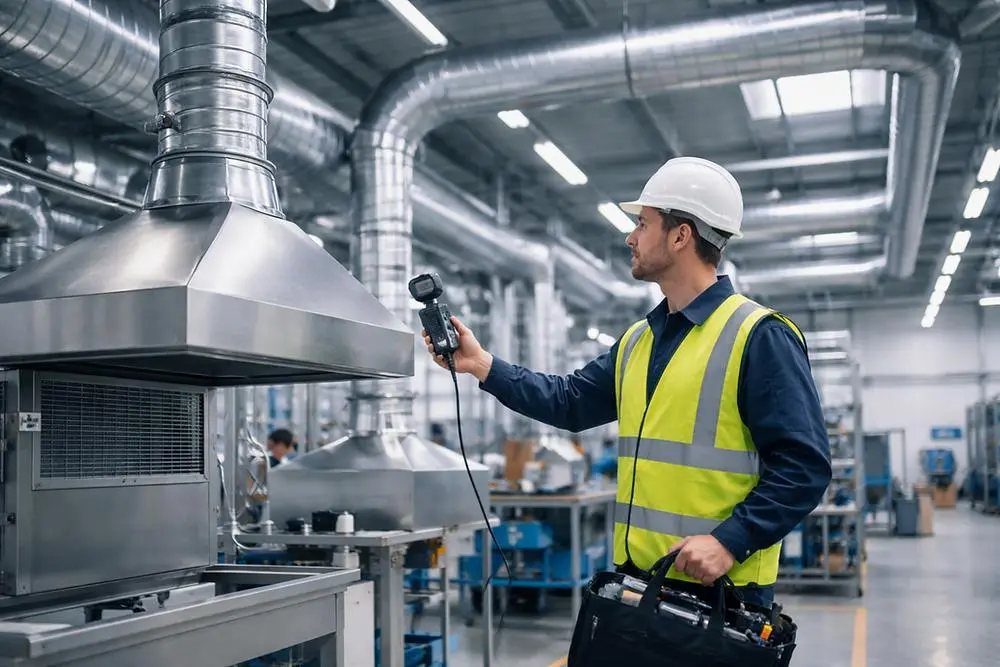
Why Welding Fumes Deserve Serious Attention
Welding is an essential part of many industries across Alberta, from manufacturing and fabrication to construction, agriculture, and oil and gas. While welding creates strong, reliable connections between metals, it also produces fumes that can affect the health of workers if they are not properly controlled.
What Makes Welding Fumes Hazardous?
Welding fumes are created when metal is heated to extremely high temperatures, causing tiny particles and gases to become airborne. These fumes can contain a mixture of substances including iron oxide, manganese, chromium, nickel, and other metals, depending on the materials and welding process being used. Because many of these particles are microscopic, they can be inhaled deep into the lungs without workers being aware of their exposure.
Short-term exposure to welding fumes may cause symptoms such as eye, nose, and throat irritation, headaches, dizziness, or metal fume fever, a flu-like illness that can develop after breathing certain metal oxides. Long-term exposure has been linked to more serious respiratory conditions and other health concerns, making proper control measures an important part of workplace health and safety.
We regularly work with employers who understand the importance of protecting their teams but are unsure whether their current controls are providing sufficient protection. Monitoring air quality and evaluating workplace conditions removes the guesswork and allows businesses to make informed decisions based on real data.
Reducing Exposure Through Proper Controls and Air Monitoring
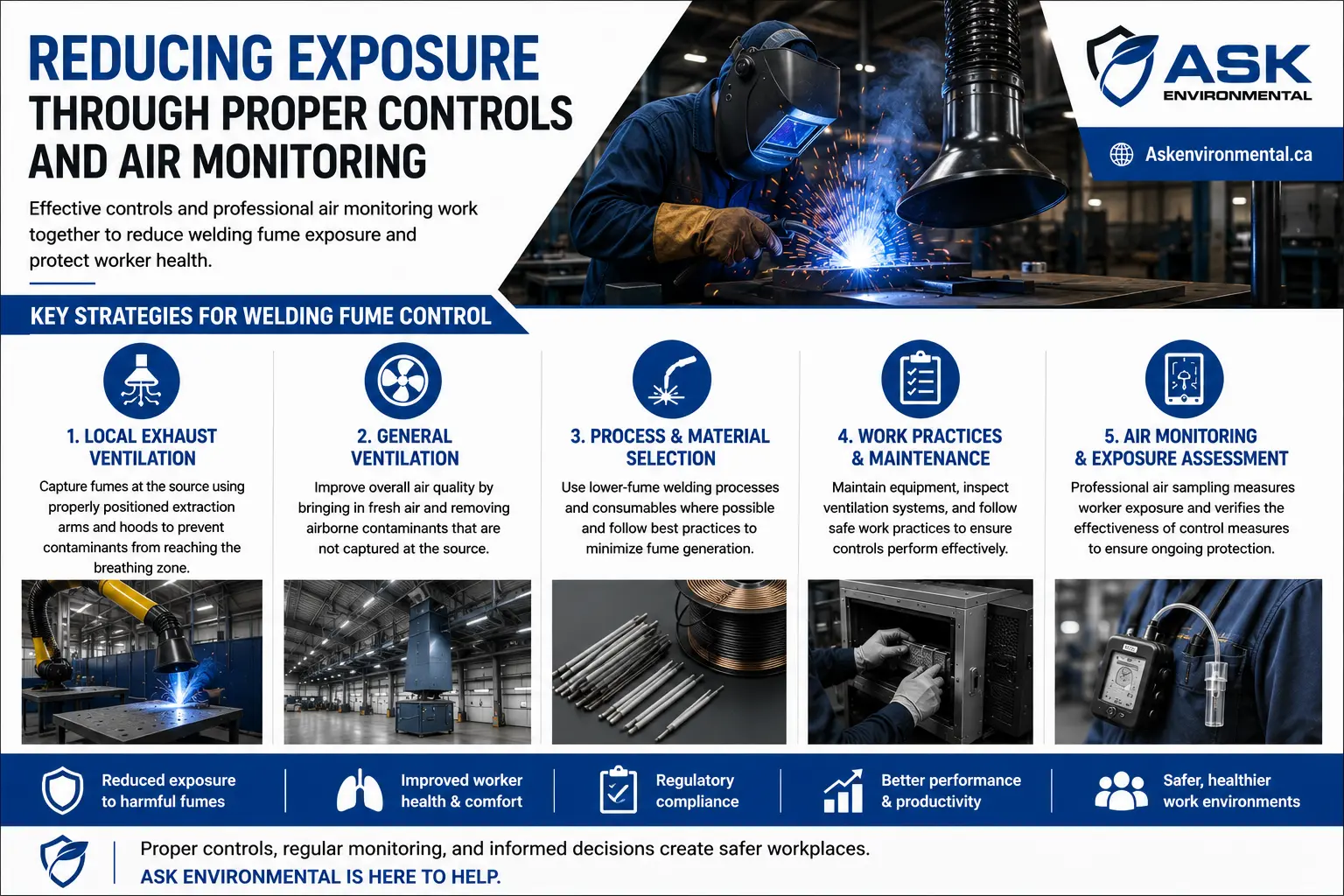
The most effective way to manage welding fumes is to prevent them from building up in the first place. This begins with understanding where fumes are being generated and how they move through the work environment.
Local Exhaust Ventilation Controls Welding Fumes
Local exhaust ventilation is one of the most effective control measures available. Properly positioned extraction systems capture fumes as close to the welding arc as possible, preventing contaminants from entering the worker’s breathing zone or spreading throughout the building. General building ventilation also plays an important role by bringing fresh air into the workspace and removing airborne contaminants that are not captured at the source.
The choice of welding process and materials can also influence fume generation. Some processes naturally produce fewer fumes than others, while selecting lower-emission consumables may help reduce airborne contaminants. Maintaining welding equipment in good condition and following manufacturer recommendations contributes to safer working conditions as well.
Air Monitoring Helps Measure Worker Exposure
Even with good ventilation, air monitoring remains an important part of any occupational hygiene program. We use professional air sampling techniques to measure worker exposure and evaluate the effectiveness of existing control measures. Personal sampling devices can monitor what individual workers are exposed to during a typical shift, while area sampling helps assess overall air quality throughout the workplace.
The results provide valuable insight into whether exposure levels are being effectively controlled or whether improvements are needed. In many cases, monitoring also establishes a baseline that businesses can use to evaluate future changes to equipment, processes, or ventilation systems.
Employee Training Supports Workplace Safety
Training is another important component of welding fume control. Workers who understand the risks associated with welding fumes are better equipped to use ventilation systems correctly, wear appropriate respiratory protection when required, and recognize situations where additional controls may be necessary.
Professional Welding Fume Monitoring Services
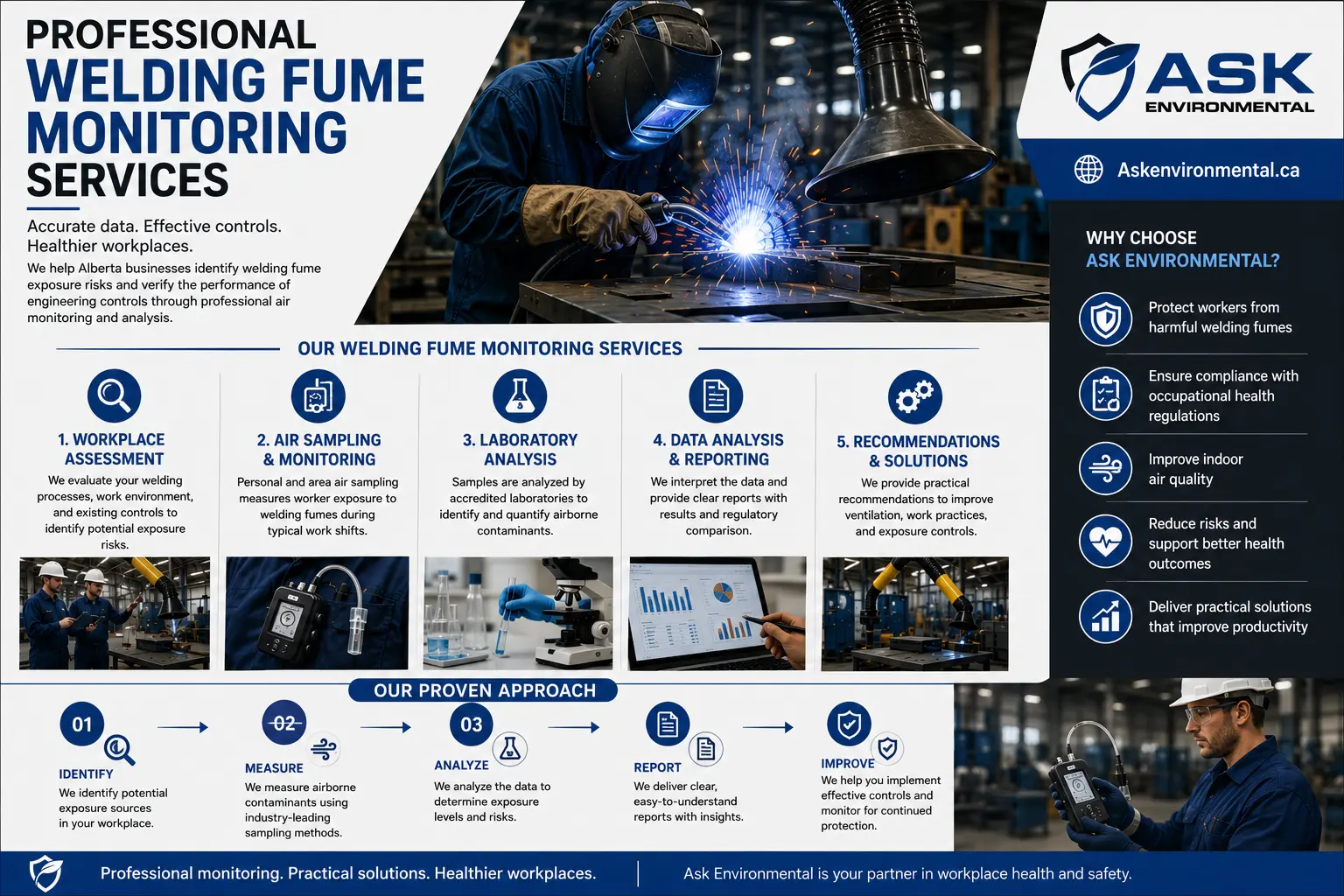
Every workplace is different, which is why effective welding fume management starts with understanding each facility’s unique operations. The size of the workspace, the welding processes in use, production schedules, and existing ventilation systems all influence the most appropriate control strategy.
We work with employers throughout Central Alberta to assess workplace conditions and develop practical solutions that support healthier work environments. Through occupational hygiene assessments and air quality monitoring, we help identify potential exposure risks and evaluate whether existing engineering controls are performing as intended.
When air monitoring identifies elevated levels of airborne contaminants through effective dust control measures and local exhaust ventilation. This may involve optimizing local exhaust ventilation, improving general airflow, adjusting work practices, or implementing additional exposure controls. Our goal is always to provide solutions that are effective, practical, and tailored to the workplace.
Why Occupational Hygiene Assessments Matter
Welding fume monitoring provides accurate information about worker exposure to airborne contaminants generated during welding operations. Professional air sampling helps employers determine whether existing ventilation systems and engineering controls are effectively reducing exposure. Combined with occupational hygiene assessments and workplace air quality monitoring, regular welding fume testing supports regulatory compliance, improves worker health and safety, and helps create healthier industrial environments.
Regular monitoring also supports regulatory compliance and demonstrates a genuine commitment to employee health and safety. By maintaining accurate records of workplace assessments and air quality testing, businesses can show they are taking reasonable steps to identify and control potential hazards.
Protecting workers from welding fumes is not a one-time task but an ongoing process of evaluation, improvement, and monitoring. As workplaces evolve and production demands change, reviewing exposure risks helps ensure existing controls continue to perform effectively.
Investing in proactive air quality monitoring benefits everyone. Employees gain confidence that their health is being protected, while employers reduce risk, improve workplace safety, and create healthier environments where people can perform at their best.
Contact Ask Environmental
Contact Ask Environmental today to learn more about occupational hygiene assessments, welding fume monitoring, and workplace air quality testing services across Central Alberta.