
Parents expect schools and daycares to provide safe, healthy environments for their children. Teachers, childcare workers, and maintenance staff deserve the same protection.
Many educational facilities across Alberta were built during decades when asbestos-containing materials were commonly used in construction.
Finding asbestos in an older school or daycare doesn’t automatically mean children or staff are being exposed. The condition of the material, its location, and whether it could be disturbed are important factors in determining the risk.
For school administrators, facility managers, and childcare operators, the priority is understanding where asbestos may be present and making sure appropriate controls are in place.
At Ask Environmental, we help organizations throughout Central Alberta identify and manage asbestos concerns so they can maintain safer buildings without unnecessary disruption.
Why Older Schools and Daycares Need Proactive Asbestos Management
Asbestos was widely used in construction for its durability, fire resistance, and insulating properties. In older educational buildings, it may be present in pipe insulation, boiler rooms, ceiling materials, vinyl flooring, drywall compounds, and other building components. Many of these materials are hidden behind walls, above suspended ceilings, or underneath existing flooring.
The concern is greatest when asbestos-containing materials become damaged or are disturbed during maintenance, renovations, or demolition.
A ceiling tile replacement, plumbing repair, or flooring upgrade may seem like a routine maintenance task. If the work involves asbestos-containing material, though, it can create an exposure risk without appropriate precautions.
Children also spend significant amounts of time inside schools and childcare facilities, which makes proactive building maintenance and environmental assessment especially important.
We recommend administrators take a planned approach to asbestos management rather than waiting until a renovation or emergency repair reveals a potential problem.
Understanding Alberta’s Asbestos Safety Requirements
Parents expect schools and daycares to provide safe, healthy environments for their children. Teachers, childcare workers, and maintenance staff deserve the same protection.
Many educational facilities across Alberta were built during decades when asbestos-containing materials were commonly used in construction.
Finding asbestos in an older school or daycare doesn’t automatically mean children or staff are being exposed. The condition of the material, its location, and whether it could be disturbed are important factors in determining the risk.
For school administrators, facility managers, and childcare operators, the priority is understanding where asbestos may be present and making sure appropriate controls are in place.
At Ask Environmental, we help organizations throughout Central Alberta identify and manage asbestos concerns so they can maintain safer buildings without unnecessary disruption.
Why Older Schools and Daycares Need Proactive Asbestos Management
Asbestos was widely used in construction for its durability, fire resistance, and insulating properties. In older educational buildings, it may be present in pipe insulation, boiler rooms, ceiling materials, vinyl flooring, drywall compounds, and other building components. Many of these materials are hidden behind walls, above suspended ceilings, or underneath existing flooring.
The concern is greatest when asbestos-containing materials become damaged or are disturbed during maintenance, renovations, or demolition.
A ceiling tile replacement, plumbing repair, or flooring upgrade may seem like a routine maintenance task. If the work involves asbestos-containing material, though, it can create an exposure risk without appropriate precautions.
Children also spend significant amounts of time inside schools and childcare facilities, which makes proactive building maintenance and environmental assessment especially important.
We recommend administrators take a planned approach to asbestos management rather than waiting until a renovation or emergency repair reveals a potential problem.
Understanding Alberta’s Asbestos Safety Requirements
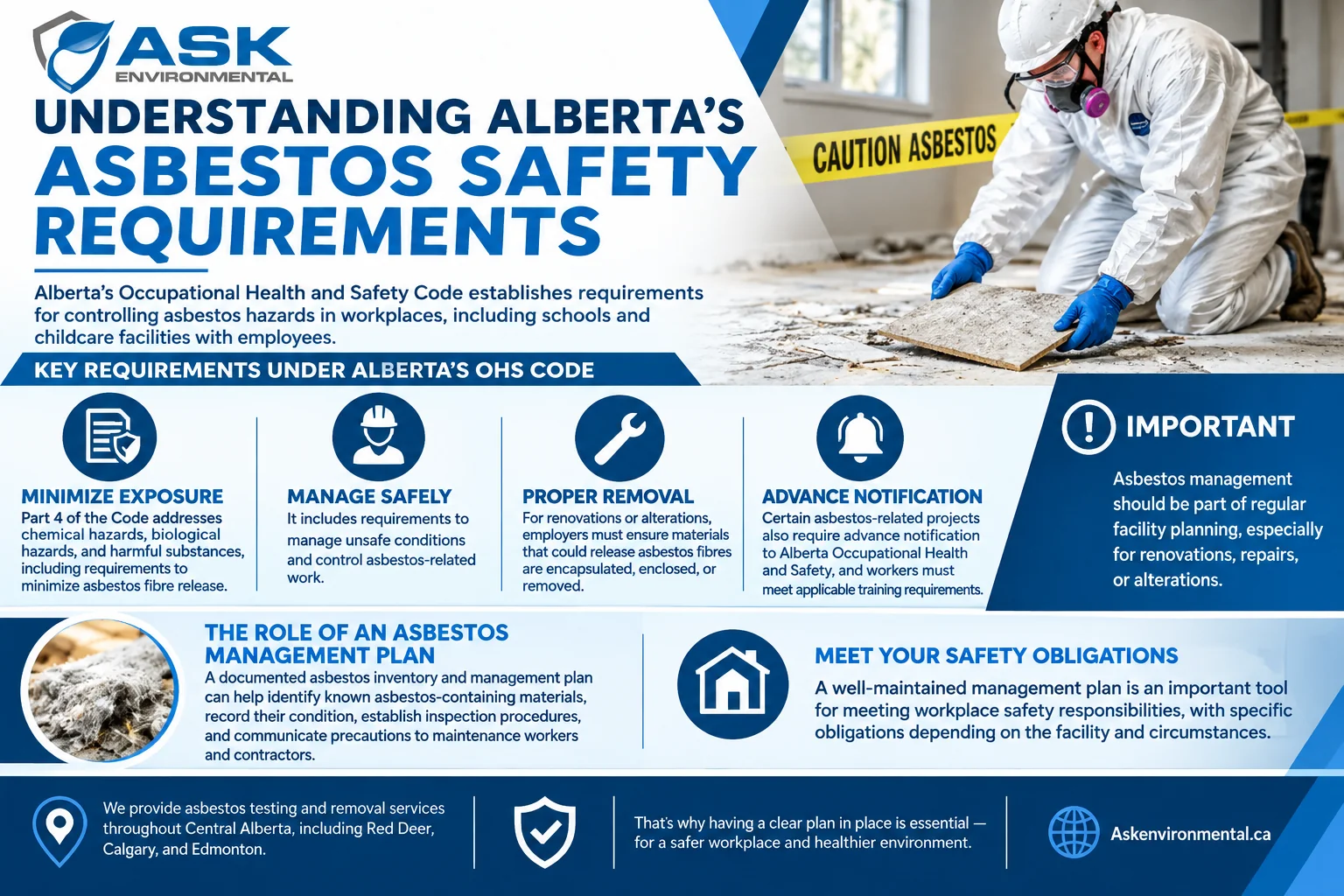
Alberta’s Occupational Health and Safety Code establishes requirements for controlling asbestos hazards in workplaces, including schools and childcare facilities with employees.
Part 4 of the Code addresses chemical hazards, biological hazards, and harmful substances. It includes requirements intended to minimize asbestos fibre release, manage unsafe conditions, and control asbestos-related work.
For renovations or alterations, employers must ensure that materials in the affected area that could release asbestos fibres are appropriately encapsulated, enclosed, or removed. Certain asbestos-related projects also require advance notification to Alberta Occupational Health and Safety, and workers entering asbestos-restricted areas must meet applicable training requirements.
For administrators, this means asbestos management should be part of regular facility planning.
A documented asbestos inventory and management plan can help identify known asbestos-containing materials, record their condition, establish inspection procedures, and communicate precautions to maintenance workers and contractors. The specific obligations depend on the facility and circumstances, but a properly maintained management plan is an important tool for meeting workplace safety responsibilities.
When a School Needs an Asbestos Survey or Abatement
A professional asbestos survey is particularly valuable when a facility has older building materials and limited documentation about previous renovations. It may also be necessary when maintenance staff discover damaged insulation, deteriorating ceiling materials, or flooring that could contain asbestos.
Major renovations provide another important opportunity to investigate. Before replacing flooring, upgrading mechanical systems, modifying classrooms, or removing walls, administrators should establish whether the affected materials contain asbestos.
We can assess suspect materials, collect representative samples, and arrange laboratory analysis to help determine what’s present. If asbestos is identified, the next step is evaluating whether the material can remain safely in place or whether remediation is required.
Asbestos Management Plans vs. Full Removal
Not every asbestos-containing material needs to be removed immediately. When material is intact, stable, and unlikely to be disturbed, managing it in place may be appropriate.
An asbestos management plan documents the material’s location and condition, identifies appropriate precautions, and establishes procedures for monitoring and future maintenance. This helps prevent situations where a contractor unknowingly drills, cuts, or removes asbestos-containing material.
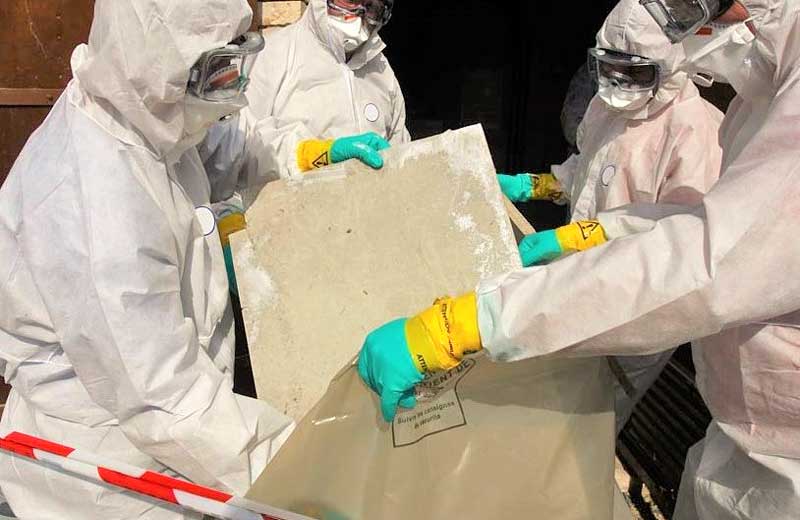
Removal becomes more appropriate when the material is damaged, cannot be effectively managed, or must be disturbed during planned construction. Professional asbestos abatement may involve isolating the work area, installing containment, using specialized filtration equipment, and following controlled removal and decontamination procedures. Depending on the project, verification and clearance testing may also be required before the affected area returns to normal use.
For schools and daycares, scheduling matters. Larger projects may be planned during summer holidays or other periods when fewer children and staff are present. Urgent asbestos concerns should be addressed based on the actual risk, though, rather than delayed simply because the school year is underway.
Clear Communication With Parents and Staff
When asbestos is discovered in an educational facility, communication matters almost as much as the technical response. Parents may understandably become concerned when they hear that asbestos has been identified in their child’s school.
Administrators should be prepared to explain where the material was found, whether it was disturbed, what precautions are being taken, and whether additional asbestos testing or remediation is necessary. Clear documentation and professional assessments help organizations communicate accurately rather than relying on assumptions.
It’s also important to distinguish between asbestos being present and asbestos fibres being released into occupied spaces. These are not the same situation. Providing factual information helps maintain confidence while ensuring legitimate concerns receive appropriate attention.
At Ask Environmental, we support school divisions, childcare operators, commercial property owners, and facility managers throughout Central Alberta, including Red Deer, Calgary, and Edmonton. We provide asbestos testing, assessments, and remediation services to help organizations understand their buildings and make informed decisions about managing potential hazards.
Whether you’re planning a school renovation, updating an asbestos inventory, or investigating suspect materials in a daycare, early assessment can help protect occupants and reduce unexpected disruptions.
Contact Ask Environmental today to discuss asbestos testing, facility assessments, or remediation planning for your school, daycare, or institutional property.
Frequently Asked Questions About Asbestos in Alberta Schools
1. Is asbestos still found in Alberta schools?
Yes. Some older school buildings may contain asbestos in materials such as flooring, insulation, ceiling products, and drywall compounds. Its presence doesn’t automatically mean the building is unsafe, but the material should be appropriately assessed and managed.
2. Are Alberta schools required to have asbestos management plans?
Alberta’s occupational health and safety legislation requires employers to identify and control asbestos hazards and follow specific requirements when asbestos-containing materials may be disturbed. A documented asbestos inventory and management plan is an important way to support these responsibilities, though the exact requirements depend on the facility and circumstances.
3. Is it safe for children to attend a school that contains asbestos?
Asbestos-containing materials that are intact, properly managed, and not releasing fibres may be able to remain in place. Damaged or disturbed materials require appropriate assessment and controls. Safety decisions should be based on the actual building conditions.
4. Does asbestos have to be removed from every school building?
No. Some asbestos-containing materials can be managed in place when they remain in suitable condition. Removal may be necessary when materials are damaged, present an exposure risk, or will be disturbed during renovations.
5. When should a daycare arrange asbestos testing?
Testing should be considered when suspect materials are identified, particularly before renovations, demolition, or maintenance that could disturb them. Older facilities without reliable asbestos documentation may also benefit from a professional survey.