

Why Older Vinyl Flooring Can Be an Asbestos Concern
Pulling up old flooring can seem like a straightforward renovation project. You remove the existing material, clean up the subfloor, and start fresh. In an older Alberta home or commercial building, however, that first step deserves a little more thought.
Asbestos was once added to some vinyl floor tiles because it provided strength, durability, and resistance to heat and wear. One of the most commonly recognized clues is older 9×9-inch vinyl tile, which is frequently associated with asbestos-containing flooring. Size alone, however, does not confirm whether asbestos is present. Other tile sizes and sheet flooring products may also contain asbestos.
There is another part of the floor that can easily be overlooked: the adhesive underneath.
Older flooring was often installed using a dark adhesive commonly referred to as black mastic. Some of these adhesives contained asbestos as well. This means a floor can potentially involve two separate suspect materials: the tile itself and the asbestos flooring adhesive beneath it.
Assuming that an old floor contains asbestos based solely on its appearance is not something we recommend. At the same time, assuming it is safe because the tiles look ordinary is equally problematic. Professional testing before demolition provides the information needed to make that decision properly.
The condition of the material also matters. An intact floor that has remained undisturbed for decades presents a very different situation from flooring that is being broken, ground, sanded, or aggressively scraped from a subfloor.
This is where many DIY renovations run into trouble. Someone sees an old 9×9 vinyl tile, starts prying up a few pieces, and then discovers black adhesive underneath. By that point, suspect materials have already been disturbed.
Testing first is considerably easier.
Removal Is Not Always the Only Option
If testing confirms asbestos in vinyl floor tile or the adhesive beneath it, the next question is usually whether all of it has to come out.
Not necessarily.
Depending on the condition of the flooring and the renovation plans, encapsulation may sometimes be an option. Rather than disturbing a stable asbestos-containing floor, a new flooring system may be installed over it using an appropriate method.
There can be a real advantage to this approach. Every time asbestos-containing material is broken or removed, there is an opportunity for fibres to become airborne. Leaving stable material undisturbed can sometimes reduce that risk.
That decision needs to be made based on the specific property, however. Damaged or deteriorating flooring may not be suitable to leave in place. Removal may also be necessary when renovations involve changes to the subfloor, walls, plumbing, floor height, or building layout.
When asbestos vinyl floor tile removal is required, we approach it as a controlled abatement project rather than ordinary flooring demolition.
The work area is prepared to reduce the risk of contamination spreading to other parts of the building. Appropriate containment, protective equipment, work practices, and specialized filtration may all be used depending on the scope of the project.
Tiles are removed as carefully as possible to minimize breakage. The adhesive underneath requires particular attention. Sanding or grinding suspect black mastic can generate dust and should never be treated like ordinary flooring preparation when asbestos is present.
Once the asbestos-containing flooring has been removed, the material must be properly packaged and transported for disposal according to applicable requirements. It cannot simply be mixed into a pile of ordinary renovation waste.
Getting the Subfloor Ready for Your New Flooring
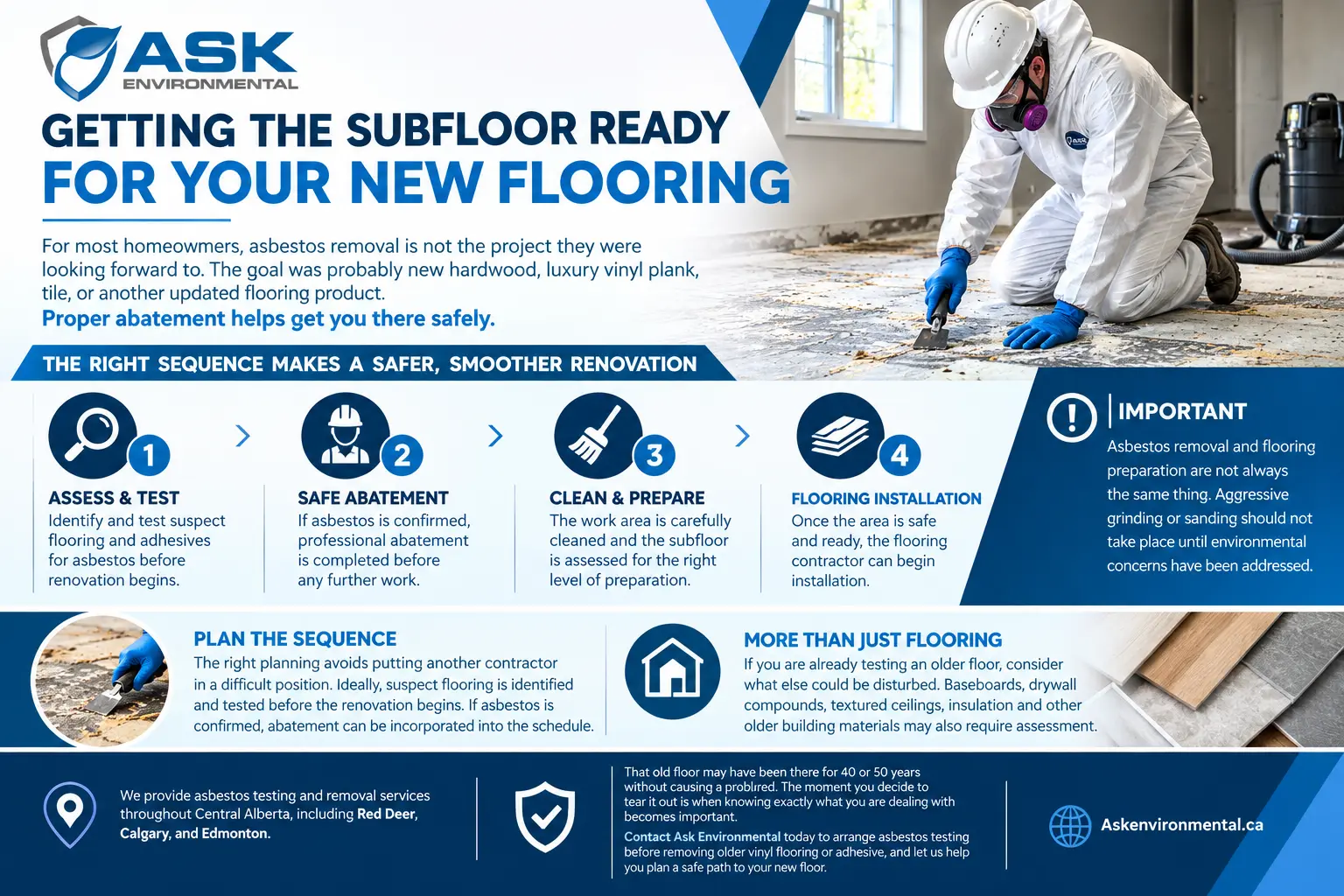
For most homeowners, asbestos removal is not the project they were looking forward to. The goal was probably new hardwood, luxury vinyl plank, tile, or another updated flooring product.
Proper abatement helps get you there safely.
After the old flooring and affected adhesive have been addressed, the work area is carefully cleaned. The subfloor can then be assessed to determine what preparation is needed before the flooring contractor begins installation.
This step is important because asbestos removal and flooring preparation are not always the same thing. A flooring installer may want a perfectly smooth surface for a new product, but aggressive grinding or sanding should not take place until the environmental concerns associated with the old flooring have been resolved.
Planning the sequence correctly avoids putting another contractor in a difficult position. Ideally, suspect flooring is identified and tested before the renovation begins. If asbestos is confirmed, abatement can be incorporated into the schedule. Once the area is ready, the flooring contractor can move forward with the new installation.
The same principle applies to larger renovations. If you are already testing an older floor, consider what else will be disturbed during the project. Baseboards, drywall compounds, textured ceilings, insulation, and other older building materials may also require assessment. Finding these issues before demolition begins is considerably easier than discovering them halfway through the job.
At Ask Environmental, we provide asbestos testing and removal services throughout Central Alberta, including Red Deer, Calgary, and Edmonton. We can assess suspect vinyl tile and flooring adhesives, explain laboratory results, and help determine whether removal, management, or another approach makes sense for the property.
That old floor may have been there for 40 or 50 years without causing a problem. The moment you decide to tear it out is when knowing exactly what you are dealing with becomes important.
Contact Ask Environmental today to arrange asbestos testing before removing older vinyl flooring or adhesive, and let us help you plan a safe path to your new floor.
Frequently Asked Questions About Asbestos Flooring
1. Do all 9×9 vinyl floor tiles contain asbestos?
No. Older 9×9 tiles are commonly associated with asbestos-containing flooring, but tile size cannot confirm asbestos content. Testing is needed to determine whether a particular flooring material contains asbestos.
2. Can the black adhesive under vinyl flooring contain asbestos?
Yes. Some older black mastics and flooring adhesives contained asbestos. The tile and adhesive should be treated as separate suspect materials when determining what needs to be tested.
3. Is it safe to install new flooring over asbestos tile?
In some situations, intact asbestos-containing flooring can be left undisturbed and covered with a suitable new flooring system. Whether this is appropriate depends on the material’s condition and the planned renovation.
4. Can I remove asbestos floor tiles myself?
Removing or breaking asbestos-containing flooring can release fibres and potentially spread contamination. We recommend having suspect materials professionally tested and obtaining appropriate advice before beginning any removal.
5. Should asbestos flooring adhesive be sanded off the subfloor?
Suspect adhesive should not be sanded or ground before determining whether it contains asbestos. These methods can create fine airborne dust, turning what might have been a manageable flooring project into a much larger contamination concern.